Organizing Your Business into Categories
Consider this book a practical guide to organizing, understanding, and communicating your business in ways that improve its visibility across traditional search engines and artificial intelligence (AI) platforms. Throughout the book, you will learn to approach modern marketing in a systematic way, using established models and frameworks to address an increasingly complex business challenge.
I like to use models when teaching and consulting. Models are valuable because they simplify complicated problems and provide a structured approach to finding solutions. Rather than starting from scratch, you can build upon concepts and methods that others have already developed in existing models. A good model helps to establish priorities, organize information, and make more informed decisions under certain conditions. Most importantly, models provide a repeatable process for real-world situations.
One of the foundational models introduced in this book is the topic cluster, which organizes your business into categories related to your products and services. An effective topic cluster organizes the business in a way that leads a business owner to answer questions that customers frequently ask. Developing a topic cluster for your business will enable you to better communicate what your business does, whom it serves, and why customers should choose it. This organized approach helps traditional search engines and AI platforms discover and interpret information about your business.
Each of the chapters in this book will provide additional models and approaches used for marketing a business in the modern world. Each chapter is a standalone concept, or model, that introduces practical actions around a specific type of marketing activity. Subsequent chapters will leverage the work you do in this chapter. Together, all the chapters create a comprehensive framework for modern marketing and search optimization. Some topics are straightforward, while others involve technical concepts that may be unfamiliar to you.
The good news is that there is plenty of documentation beyond this book that can help you apply the approach you will learn here. Once you understand this overall framework, you can adapt it as search platforms continue to evolve so you can continue developing your marketing efforts.
Category Management
The initial work in this book challenges you to think from the perspective of category management. To successfully market your business today, you must use category management principles to organize and position your products and services. Large, sophisticated businesses frequently use category management to organize their offerings, understand customer needs, and make strategic decisions. This is the way that Google thinks about businesses, so thinking in a structured and categorical way helps businesses properly market themselves.
For many small business owners, this approach is not natural. They typically think about their businesses in terms of daily operations, individual products, or the general services they perform. However, effective modern marketing requires thinking more specifically about how customers identify, understand, and search for those products and services.
The foundation of effectively marketing a business today is improving its ability to be discovered when potential customers search for relevant products, services, or solutions to their problems. Accomplishing this requires developing a logical, hierarchical content structure that organizes the information associated with your business. This organizational approach provides the foundation for developing what is known as a topic cluster, a collection of related content that helps customers, traditional search engines, and artificial intelligence platforms better understand your business.
Developing a Topic Cluster
You probably think about your business in broad ways. Let’s say you own a service station for vehicles that primarily provides oil changes. You probably offer other services as well. You might repair flat tires, replace air filters, change light bulbs, and perform diagnostic scans for customers. As a business owner, you may think of these activities collectively as automotive services. However, your customers think about them differently. They typically have a specific problem or need they want addressed. For example, a customer might ask, “Where can I get an oil change locally?” A natural follow-up question might be, “How much will an oil change cost?” Other customers might ask, “Where can I get a flat tire repaired?” or “Why is my check engine light on?”
Each of these questions represents an opportunity for your business to be discovered. By organizing your services into broad categories, then drilling into more specific topics, and finally thinking about the individual questions customers ask, you create a structured approach to communicating what your business offers.
The topic-cluster approach to website organization has become an established content marketing strategy. HubSpot, a leading customer relationship management (CRM) company, describes topic clusters as groups of related information organized around a central subject, with supporting topics exploring more specific concepts, questions, and areas of interest. This structure creates a logical relationship between broad business offerings, or categories, and their more detailed components that customers care about.2
On the company website, this materializes as webpages that are connected through internal links, creating a logical structure that helps visitors navigate related information. Google’s SEO Starter Guide similarly emphasizes organizing websites into logical content, and then linking related pages to help search engines discover and understand information.3 This is the way you want to think about your business moving forward, which should influence the way your website should be designed.
To simplify, a topic cluster is just a way to organize your business on paper. It is a model of your business. Although creating topic clusters alone does not guarantee higher search rankings, the approach provides small businesses with a practical framework for organizing their expertise and developing content that addresses customer needs. It’s a model that will be useful over and over when trying to develop content to market your business across different areas.
Figure 1 shows a topic cluster that could be developed by the aforementioned service station. It is a model that organizes related information around a central subject, which is the automotive service station. It then connects the central subject to more specific supporting ideas, which are the various categories of services provided. That leads to the the detailed topics under the services, which can easily be turned into content. This approach helps traditional search engines and AI platforms to discover and interpret what your business offers and the specific customer needs it addresses.
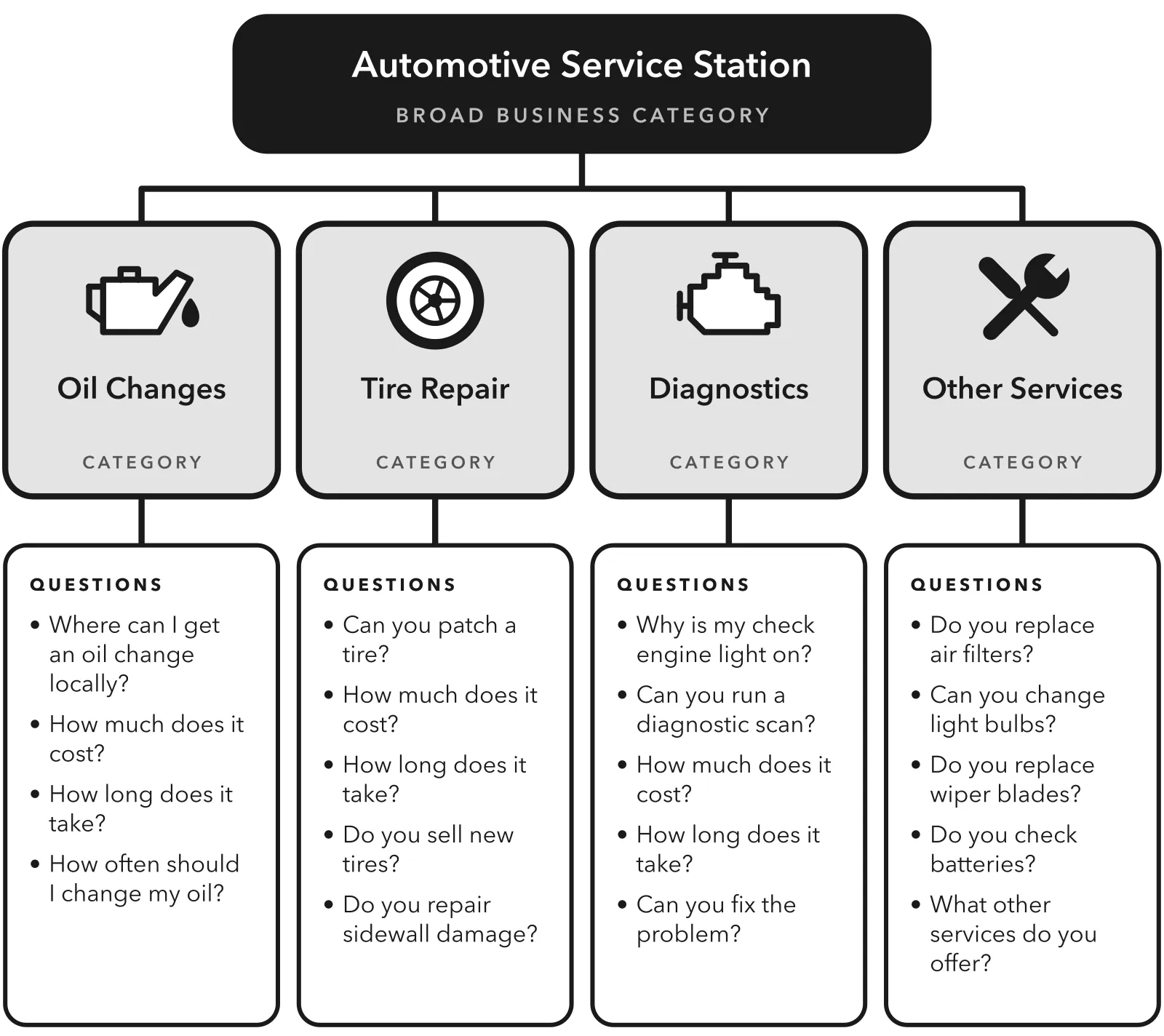
Figure 1: The Topic Cluster for an Automotive Service Station
Addressing Customer Needs
People don’t simply say, “I need a dry cleaner.” They ask, “Can a dry cleaner remove this stain from my clothing?” You have to think in specific questions your customers will ask. Everything you do going forward to market your business will involve thinking about your services the way a customer does. The exercise of building your topic cluster creates an organizational model that looks at your business from both the perspective of the business and the customer. You can see that it’s both a top-down and bottom-up model of the business.
Building a comprehensive topic cluster requires thinking carefully about what you offer, how each service differs, and what customers need to know before making a purchasing decision. Through this process, you may discover opportunities to describe existing services more clearly, highlight overlooked offerings, or even identify additional services worth providing. The more precisely you explain your services, the more opportunities you create to appear in customer searches.
Customer conversations are an excellent source of information for developing your topic cluster. By documenting the questions customers actually ask, you can begin identifying the specific topics that belong beneath your primary service categories. Some experts recommend recording customer calls, where legally permitted and with appropriate consent, to identify recurring questions and concerns. However, a more practical approach is to maintain a running list of questions received through phone calls, emails, text messages, and face-to-face interactions.
Each question represents a specific customer need, and addressing those individual needs is one of the ways businesses win customers today. Over time, answering even the most basic questions helps you develop content that markets your business in a modern and effective way. These answers can become individual website pages or supporting articles, Google Posts, and even social media content. You will create a comprehensive collection of useful information organized beneath your primary service categories that can be used in many ways in your marketing.
Developing a topic cluster will be especially helpful when setting up your Google Business Profile (Chapter 2), developing your website (Chapter 3), creating your Yelp profile (Chapter 5), publishing social media posts (Chapter 7), and performing virtually every other marketing activity discussed in this book. Rather than developing content independently for each platform, which is very cognitively demanding, you will have an organized collection of topics and information that can be adapted and reused across your marketing activities.
Effective marketing today must be customer-centric, and there are very practical reasons for this, as you will learn throughout this book. Your topic cluster provides the foundation for that approach by connecting what your business offers with the specific information your customers are seeking.
For Companies with Multiple Locations
For companies that operate in more than one location or serve multiple geographic areas, there is another dimension to consider when developing a topic cluster. The relationship between services and locations. In addition to organizing information around the products and services you offer, you must also consider where those services are available.
A practical approach is to develop a simple matrix that cross-references every service with each business location (Figure 2). This can be a simple spreadsheet with locations across the top and services in the left column. This is particularly important because not every location may offer the same products or services. This information should then be reflected in your website structure.
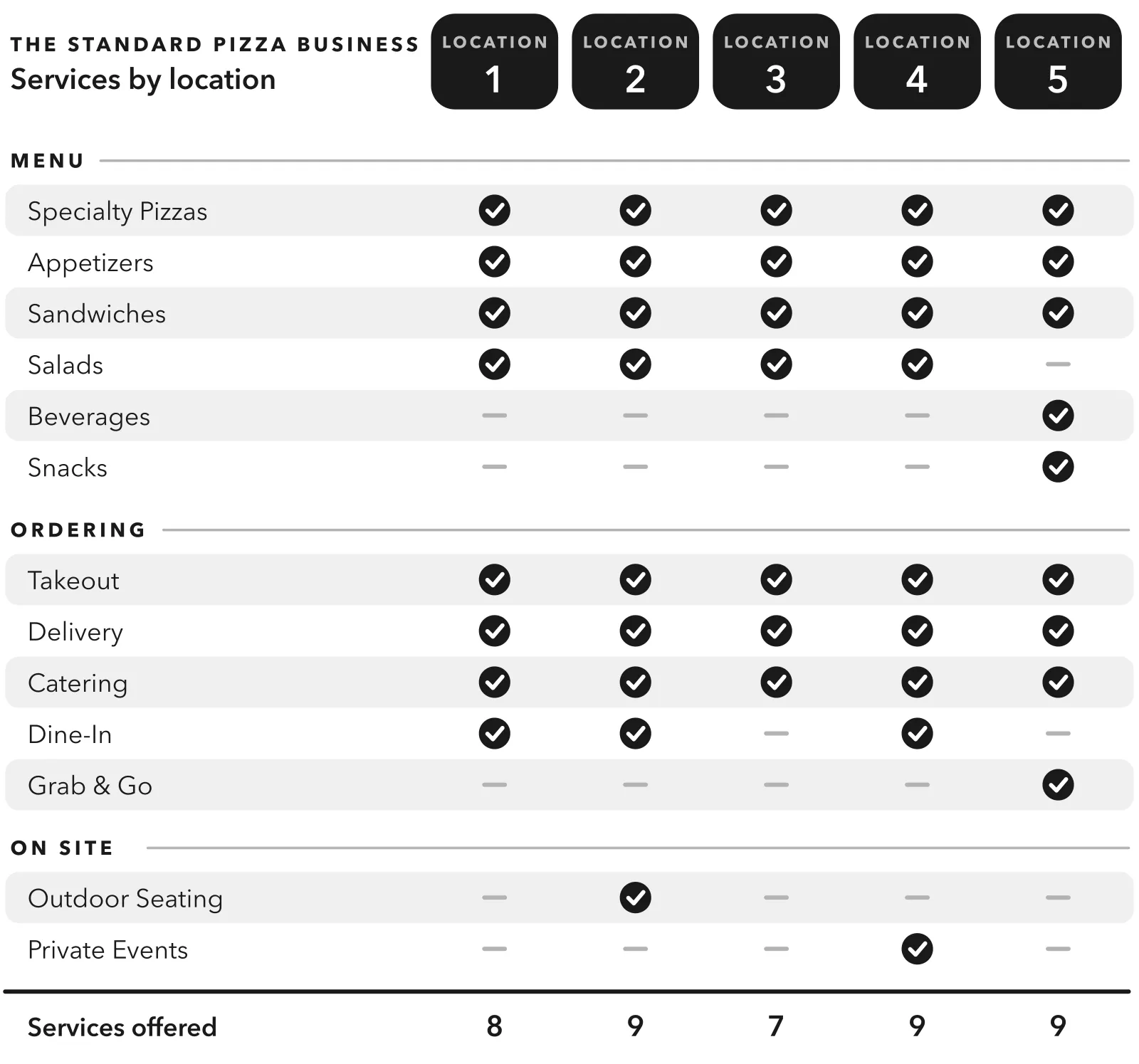
Figure 2: The Topic Cluster for a Multiple Location Business
When developing your website, each location should have its own page containing accurate information about its address, hours, contact information, and available services. Where appropriate, individual service pages can also identify which locations offer each service and internal links can be used to connect service pages and location pages help customers navigate the website and understand where they can obtain what they need. The objective is to organize your business information around two important points, which includes the services you offer, and where can customers obtain them. By addressing both dimensions, you create a more complete topic cluster that better represents your business and provides customers with clear, useful information for businesses that service multiple locations.
Build Your Own Topic Cluster
Let’s develop a simple topic cluster using pen and paper. In a topic cluster, you want to organize your business categories so that search engines and artificial intelligence better understand what you do. Start by thinking about the broadest categories or services and products your business provides. As you developing the topic cluster for your business, you will move from the broadest categories to the smallest details customers need to make informed decisions. This involves answering specific questions about your products or services for customer.
When developing your topic cluster, be sure to think about customer questions clearly, accurately, and conversationally. Avoid unnecessary technical language, promotional filler, or content designed solely to attract search traffic. Instead, focus on providing helpful, relevant information that demonstrates your expertise and addresses genuine customer questions and needs.
On a piece of paper:
-
Start by simply writing what your business does at the top of the page.
-
Then, like the service station in Figure 1, think about the broad service or product categories that you provide. Write those in a row just below the primary business category.
-
Finally, take a few minutes to think about all the questions that customers can ask about your products and services. Write each of those below the related category.
In a relatively brief time, you have developed a topic cluster. That’s not the final model. You will keep getting more questions that you should add over time, and that is a good thing. Whenever possible, record additional questions and information customers seek during your direct interactions with them. Over time, this will help you build a valuable collection of topics that reflect genuine customer needs and interests, and that will help you develop the content you need to market your business.
Applying the Lessons: The Standard Pizza Business
Let’s look at a specific example using The Standard Pizza Business (TSPB). Everyone understands pizza! As the owner of The Standard Pizza Business (TSPB), yes, you sell pizza, but there is much more to your business than just pizza. You also offer appetizers, delivery, and catering. Each of these becomes a category of information you can share with customers.
As an example, let’s look at specialty pizzas. You might offer traditional pizza, vegetarian pizza, meat lovers’ pizza, white pizza, and gluten-free pizza. Each type gives you an opportunity to provide more information. What ingredients are included? What sizes are available? Can customers make substitutions? How much does it cost? The owners should keep getting to that level of detail for each category of product that TSPB offers.
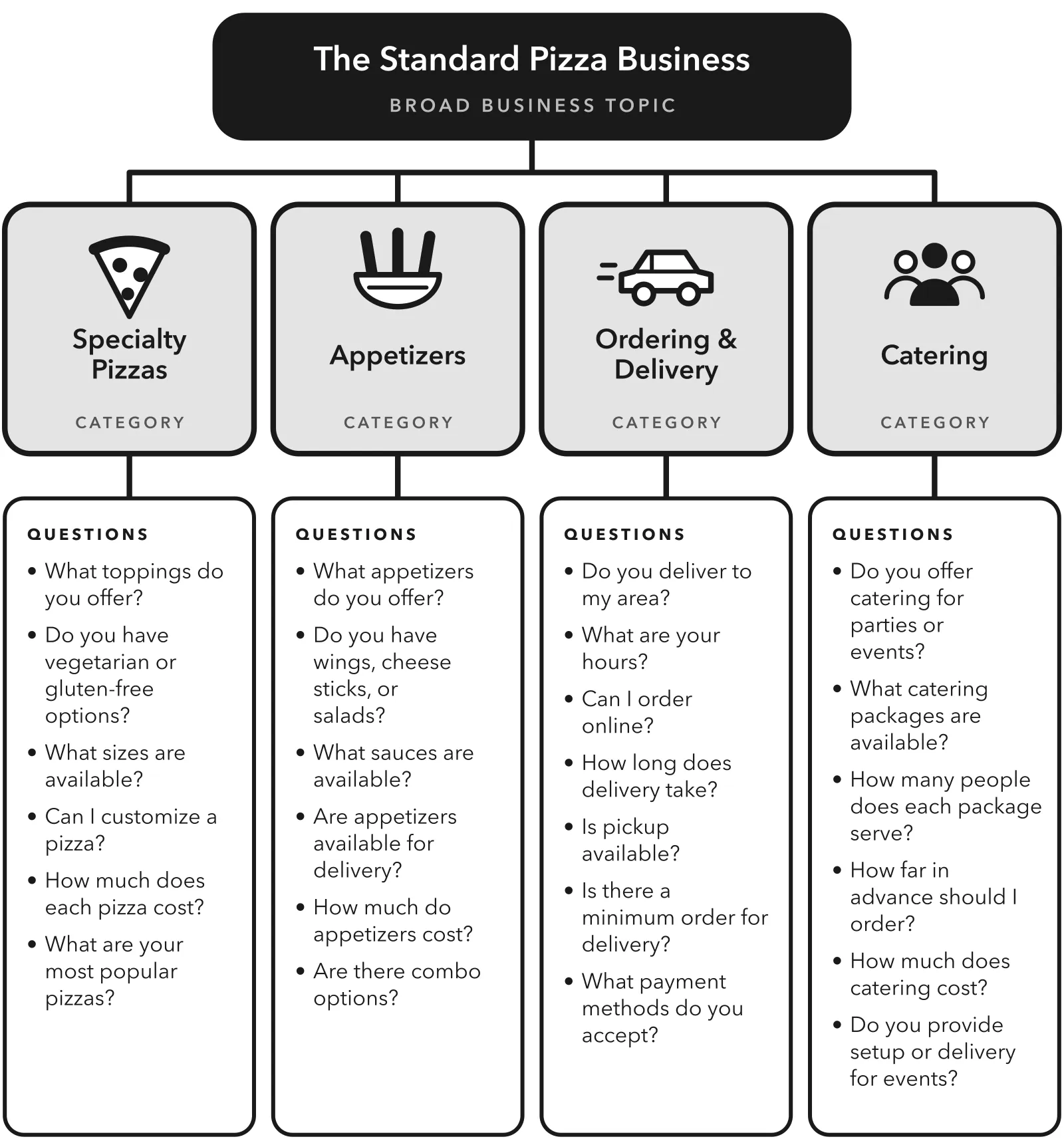
Figure 3: Topic Cluster for The Standard Pizza Business
Every question represents a potential opportunity to win over customers by addressing their specific needs. For example, a customer considering ordering from The Standard Pizza Business (TSPB) might ask:
- What is the best pizza restaurant near me?
- Does the restaurant offer pizza delivery?
- What is the difference between New York-style and traditional pizza?
- Does the restaurant offer gluten-free pizza?
- How much does it cost to order pizza for a party?
The objective is to move from broad categories to increasingly detailed questions, which will create a logical and organized structure that demonstrates what The Standard Pizza Business offers. This approach enables TSPB to develop content that will help customers find relevant information about the company and make it easier for traditional search engines and artificial intelligence platforms to understand the relationships among the business’s products and services.
References
-
Google LLC. (2022). Contextual estimation of link information gain (U.S. Patent No. 11,354,342). U.S. Patent and Trademark Office. https://patents.google.com/patent/US11354342B2/en
-
An, M. (2026, June 17). Topic clusters: The next evolution of SEO. HubSpot. https://blog.hubspot.com/marketing/topic-clusters-seo
-
Google. (n.d.). SEO starter guide: The basics. Google Search Central. https://developers.google.com/search/docs/fundamentals/seo-starter-guide